EN
.JPG)
That is more than any other area we track and reflects a fundamental shift in how people and organisations are working.
Cross-functional, multi-country teams are now the norm, especially in life sciences. Collaboration often spans time zones and cultures, with face-to-face meetings only a few times a year.
With leaner structures and limited resources, success now depends on how well we can influence one another to align priorities and move things forward.
Why influencing matters
Influencing today is not merely about authority or hierarchy. It’s about connection, credibility, and mindset. The ability to engage others, build trust, and inspire action has become critical in environments where we rely on cooperation rather than command.
Louise Roberts, Head of Customer Learning Experience at OTD, explains: “We are talking about influencing where you are not in a position of power in an organisation. It’s a skill rooted in self-awareness and choice. You have to choose how you show up and influence in the right way.”
The art of showing up
Influence happens in everyday moments, whether in a meeting, on a virtual call, or during a quick corridor conversation. Louise often talks about how these small interactions shape the way others see us.
“When I interact with people. I want them to have a good experience and leave feeling like they have been part of a great conversation,” she says. “That is me being influential, helping others feel engaged and on board with how I am thinking.”
OTD has been delivering Influence Without Authority training for more than 15 years. A key part of the programme invites leaders to reflect on their personal impact and imagine they have a billboard describing them as a leader.
“What would you want people to see, think, and feel? And then, what do people actually see right now?” adds Louise.
It is just one of several creative exercises that encourage reflection on how we demonstrate our values and capability and how our behaviour influences others’ perceptions.
Adapting to culture and context
While the foundations of influence are universal, how people apply them depends on cultural context. Before every programme, we hold discovery conversations with local stakeholders to understand what influencing looks like in their world.
Louise explains: “In Japan, for example, it is not appropriate to challenge authority directly. So we work with participants to find ways to share ideas and gain support within that cultural framework. This flexibility ensures the learning feels relevant and immediately applicable, wherever participants are based.”
From awareness to action
Many people recognise that influencing is important but are not sure how to approach it strategically. A core part of our programme involves stakeholder mapping, helping participants identify advocates, supporters, blockers, and critics.
“When you map your stakeholders, you give yourself a framework,” says Louise. “You can plan how to engage different groups, turn critics around, and strengthen relationships with supporters.”
Influencing Without Authority has been shaped by the input and experience of thousands of participants. With every delivery, we refine the content, add fresh insight, and build on what works best in practice.
At its core is the same key principle. “Influence isn’t just what you say,” adds Louise. “It’s how you show up, how you connect, and how you make others want to follow your lead.”
Click here to find out more.

The Black Business Collective, a subscriber network for Black business owners and professionals backed by the Greater Birmingham Chambers of Commerce, has appointed Chris Cummins as its new chair.
Read More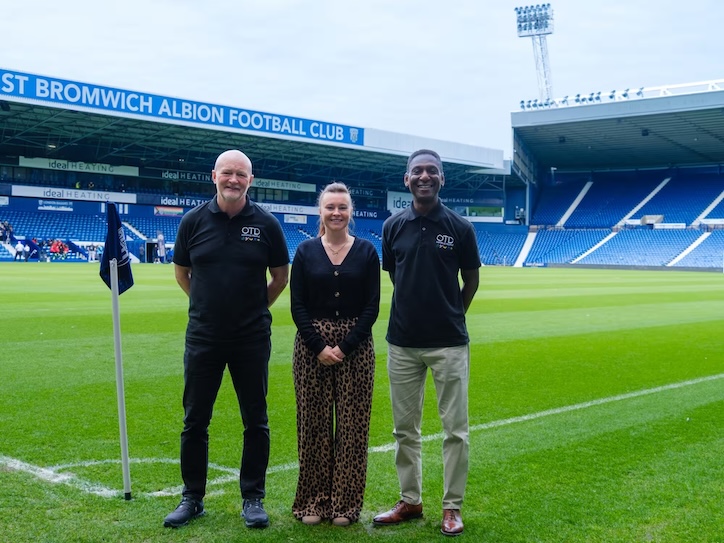
OTD has furthered its commitment to making a meaningful and lasting difference across the local community, by joining The Albion Foundation Patron Club.
Read More.png)
OTD has been named one of the UK’s top 100 inclusive employers by the National Centre for Diversity.
Read More
When political rhetoric downplays the importance of equity, diversity and inclusion (EDI), it’s easy for companies to lose sight of why EDI matters. Lian Bemrose, culture and compliance manager at OTD, explains why inclusion isn’t a distraction from real business - it is real business.
Read More
Many of our customers, new and prospective, often ask the same question: “How do you do what you do?” To give them a glimpse, we’ve created a short video clip.
Read More
Quality means more than delivering a great workshop. It’s about creating a seamless experience from beginning to end, one that feels personal, engaging, and truly delivers for every customer.
Read More
Artificial intelligence is rapidly changing how people perform at work, but how can it be used to translate learning into performance?
Read MoreDid you know that almost 1,000 participants in OTD workshops over the past year ranked influencing skills as their top development priority?
Read More%20(1).jpeg)
OTD has been awarded the Investors in Diversity (IiD) Silver accreditation by the National Centre for Diversity, recognising its commitment to creating a fair, inclusive, and respectful workplace culture.
Read More
OTD co-founder, Chris Cummins, has been selected to join a committee of Black business leaders who are supporting the economic growth and development of Black-owned businesses.
Read More.jpg)
OTD is proud to support this year’s Homelessness Doesn’t Take a Holiday campaign from Birmingham-based charity SIFA Fireside - and is calling on other local businesses to do the same.
Read More
OTD has expanded its senior team with the appointment of two experienced project managers, boosting its ability to deliver complex programmes worldwide.
Read More
OTD has announced the launch dates for its City & Guilds Assured 'Performance Coaching with GROW' programme, with two interactive sessions taking place on Thursday 15 May and Wednesday 21 May 2025.
Read More
In today’s fast-paced business environment, organisations need leaders who can coach effectively, empower teams, and drive sustainable success.
Read More
Imagine if your team could craft world-class pitches, deliver exceptional coaching programmes, and achieve outstanding customer outcomes. What impact would that have on your business?
Read More
OTD has announced a strategic investment in project management expertise to strengthen the international delivery of its coaching and training services.
Read More
The times, they are a-changin’ - but some challenges remain the same.
Read More
OTD is gearing up for an exciting year of NLP training in 2025, with a series of programmes led by co-founder Chris Cummins.
Read More
Birmingham-based global coaching and training business, OTD, has announced the appointment of Rebecca Farnworth as managing director, effective January 2025.
Read More
Skills can drive your business forward. But how can you be sure the training you're investing in will deliver the results you need?
Read More
Inclusivity isn’t about ticking boxes - it’s about creating a culture where every individual is seen, heard, and respected.
Read More
Your people matter to us. We’re driven by a simple mission: to inspire your team to thrive, by creating lasting change.
Read More
Goal setting is the key to creating long-term behavioural change. Here, we identify six ways you can reach your goals.
Read More
OTD has announced that it has become a member of Race Equality Matters, a UK-based initiative dedicated to tackling race inequality in the workplace and beyond.
Read More
Coaching can help individuals reach personal transformations. Here are some key coaching trends that are making this happen.
Read More
OTD has launched its first podcast series in celebration of Black History Month (BHM) 2024.
Read More
“Rome wasn’t built in a day.” It’s a statement that rings as true now as it did when it was first spoken.
Read More
OTD is set to offer its world renowned presentation skills training to consumers.
Read More
When it comes to managing a successful business, culture is everything.
Read More
OTD has been awarded an international quality mark for excellence in training and learning.
Read More
Global coaching and training business, OTD, has announced a new collaboration with Quaffle, a Singapore-based technology company dedicated to improving team performance through advanced feedback solutions.
Read More.jpg)
OTD will team up with Eleven Sports Media and the Birmingham City Community Partnership for the 2024/25 season.
Read More
OTD has been awarded We invest in people, platinum accreditation by Investors in People (IIP).
Read More
OTD has announced the appointment of its first culture and compliance manager.
Read More
"My brain had too many tabs open,” explains Lian Bemrose, who recently returned to work at OTD, following maternity leave.
Read More
OTD has announced an exciting new series of NLP programmes available to attend in 2024.
Read More
When you’ve delivered a successful programme for 17 years, there’s a temptation to retain the status quo.
Read More
OTD has launched a new digital application that is set to complement its delivery of world-renowned programmes.
Read More
Do you feel able to express yourself at work? Many of us are uncomfortable about doing so.
Read More
OTD has reaffirmed its commitment to equity, diversity and inclusion by announcing that all of its business coaches are to receive inclusivity training.
Read More
A Birmingham-based global training company has given local businesses a taste of what it takes to be a world-class presenter.
Read More
Birmingham-based global training company, OTD, has announced a bold new brand identity and revealed its new website.
Read More
It’s World Listening Day, an annual global event which focuses on understanding cultures and societies through listening.
Read More
OTD has reported a record Net Promoter Score (NPS) following recent survey data analysis.
Read More
It’s International Coaching Week, a global celebration of the power and impact of professional coaching.
Read More
Report reveals extent of OTD’s community partnership, including its ongoing commitment to four chosen charities.
Read More
OTD has announced a new community partnership with one of English football’s most historic clubs.
Read More